A town takes shape
Mooresville was incorporated in 1873 and developed around transportation, agriculture, and commerce. Its traditional street grid and surviving downtown buildings still express that origin.
Origins · Mooresville NC
Mooresville’s modern identity rests on three layers: a railroad-era town, an industrial textile center, and a lake-and-motorsports economy that transformed the region in the late twentieth century.
Key Takeaways
Mooresville was incorporated in 1873 and developed around transportation, agriculture, and commerce. Its traditional street grid and surviving downtown buildings still express that origin.
Cotton mills became a major source of employment and shaped generations of local life. Later economic transitions left industrial buildings and infrastructure that continue to influence redevelopment.
The creation of Lake Norman changed western Iredell County, while racing teams and suppliers made Mooresville an international center of motorsports engineering and culture.
The town formed around a railroad depot on land associated with John Franklin Moore, and the rail line gave farmers and merchants access to regional markets.
Textile manufacturing became the economic engine, with mills and mill villages shaping neighborhoods and downtown commerce for generations.
The creation of Lake Norman by Duke Power introduced waterfront living and recreation, gradually turning former farmland into lake communities.
Racing teams, motorsports suppliers and corporate employers helped Mooresville evolve into a fast-growing town with a strong identity rooted in both heritage and innovation.
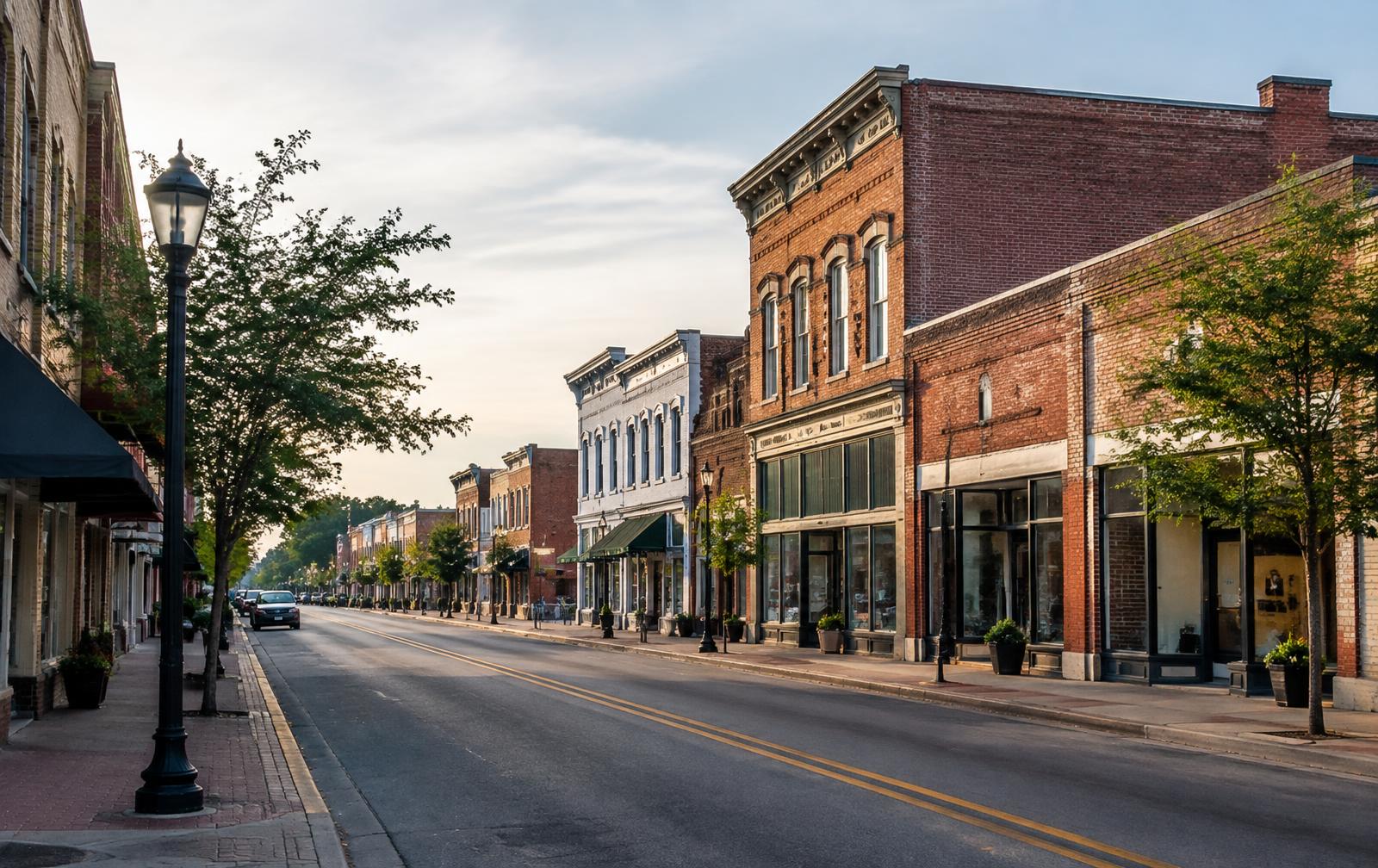
Historic Main Street offers a way to understand Mooresville beyond a timeline. Look at how storefronts meet the sidewalk, how upper stories relate to commercial space below, and how neighboring buildings create a continuous street edge. Brickwork, window proportions, and signs of altered openings can prompt questions about changing uses, but they should not be treated as proof of a particular building's history. Compare observations with archival photographs or documented property research through local history resources. For someone considering downtown living, this exercise also reveals how traditional commercial streets differ from residential subdivisions in their relationship to public space. Enjoy the visual character while separating architectural interpretation from verified evidence; an attractive facade alone cannot establish an original use, construction period, or preservation status.
Mooresville's railroad, industrial, and lake-oriented identities occupy different kinds of space. Looking at historical maps alongside present-day parcel information can help explain why street patterns and property shapes vary across the area. A compact grid, an industrial tract, and a winding waterfront road reflect different development circumstances rather than a single town plan. Treat map comparison as a research tool, not a substitute for a survey or title examination. Old road alignments and apparent access points may no longer represent legal rights. Buyers drawn to a historic setting should ask a real estate agent and closing attorney to distinguish cultural context from enforceable property interests. Confirm address-specific zoning and access questions with the Town of Mooresville or Iredell County before drawing conclusions from historical material.
Lake Norman is both a residential setting and a Duke Energy reservoir on the Catawba River, created by Cowans Ford Dam. That origin helps explain why shoreline ownership, dock permissions, and water-related expectations require a different approach from an ordinary backyard. A scenic view does not establish unrestricted use of the shore. For buyers, understanding the lake's infrastructure role provides useful context for the shoreline management framework encountered during due diligence. Duke Energy administers shoreline and dock permitting under its Shoreline Management Guidelines, alongside other applicable requirements. Historical appreciation and practical ownership therefore meet at the water's edge. Ask Duke Energy about the specific property and proposed activity rather than assuming an existing structure, familiar local custom, or a neighbor's arrangement establishes permission for your own plans.
A home can look historic without carrying a formal preservation designation, and a documented historic property may have obligations that are not apparent from the street. When considering an older Mooresville home, ask whether any local designation, district rules, recorded restrictions, or other review requirements affect the parcel. Do not assume that age alone prohibits alterations or that a renovated neighboring house establishes what will be allowed. Ask the Town of Mooresville for the applicable planning and preservation information, and have an attorney review recorded restrictions. Bring a qualified architect or contractor into the discussion before budgeting exterior changes. Character can be an important reason to buy, but a clear understanding of the regulatory setting helps owners preserve what they value without confusing aesthetic preference with a legal requirement.
A property's history is richer when it includes residents, workers, and everyday uses rather than only prominent names. Ask local library or archival staff which records may help investigate a building or neighborhood, and distinguish documented sources from family recollections or marketing descriptions. Deeds, maps, photographs, and oral histories answer different questions and may not agree in every detail. Keep source notes when assembling a house history so later readers can understand what is established and what remains uncertain. For newcomers to Mooresville NC, this approach creates a more grounded connection to the community than relying on a polished anecdote. Respect privacy and obtain permission before sharing personal materials. Historical interest adds meaning to ownership, but an appealing story should never substitute for evaluating the property's physical condition and legal status.
Common Questions
The town is named for John Franklin Moore, associated with the land where the railroad depot and town developed.
Railroad commerce and textile manufacturing, before Lake Norman and motorsports reshaped its identity.
Yes, historic Main Street and surrounding neighborhoods retain many historic buildings.
Appearance and age alone do not establish eligibility. Designation, the proposed work, ownership circumstances, and the rules of a particular program may all matter. Ask the responsible preservation authority and a qualified tax professional before including any benefit in a renovation budget. Do not assume a neighboring property's treatment applies to yours.
Ask for the source behind the claim and look for supporting property records, archival photographs, or other documented research. A listing description may repeat an appealing local tradition without establishing it. Your closing attorney can address legal records, while local archival staff may help identify sources for the broader historical narrative.
No. Historical significance and building condition are separate questions. Hire appropriate licensed professionals to evaluate structure, moisture, electrical systems, and any other concerns identified during inspection. Original details may deserve careful treatment, but neither attractive preservation nor extensive renovation establishes that concealed components are safe or suitable for your intended use.
Yes. Public streets and sidewalks around historic Main Street allow observation of the town's streetscape without entering homes or work sites. Respect posted restrictions and ordinary pedestrian safety. If you want interior access to a building or organized historical interpretation, verify arrangements with the responsible property owner or organization before planning a visit.
Photograph the item or feature in place, record its location, and ask the contractor to pause affected work when professional advice is needed. Avoid assuming that an unfamiliar material is safe to handle. A qualified specialist can advise on conservation or hazardous-material concerns, while archival staff may help interpret nonhazardous historical discoveries.
Related Guides