A lake made for movement
Boating, paddling, fishing, and quiet cove time all coexist here. Public access points, private marinas, community slips, and residential docks serve different kinds of users.

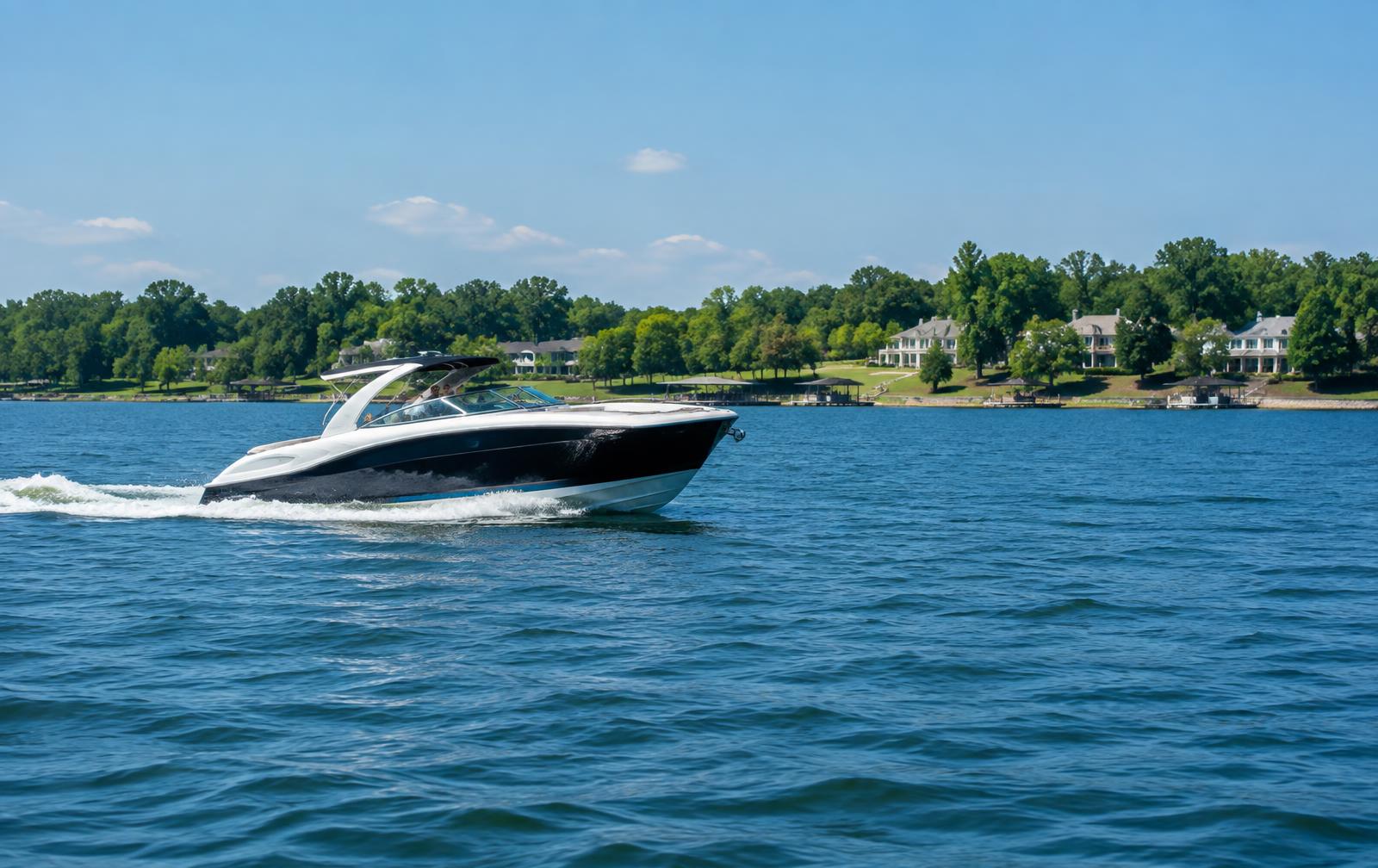
On the Water · Mooresville NC
Lake Norman is the organizing idea behind western Mooresville. The water shapes weekend plans, architecture, neighborhood geography, and the way residents think about distance.
Key Takeaways
Boating, paddling, fishing, and quiet cove time all coexist here. Public access points, private marinas, community slips, and residential docks serve different kinds of users.
Verify the dock and shoreline records rather than relying on appearance. Ask about cove depth through seasonal water levels, wake exposure, dredging history, utilities, septic, setbacks, and ownership of shoreline improvements.
Mooresville-area boaters use facilities including Stutts Marina, All Seasons Marina, and public access areas such as Pinnacle. Availability, services, ramp conditions, and slip policies should be confirmed directly.
Lake Norman was created by Cowans Ford Dam on the Catawba River and is operated by Duke Energy for power generation and water supply. Its shoreline winds through several counties, and Mooresville occupies much of the northeastern portion, including the Brawley School and Mount Mourne areas.
Residents use the lake for cruising, wakeboarding, sailing, fishing and sunset dinners by boat. Weekends on the main channel can be busy; coves and weekday mornings are quieter. Boater education is required for many operators in North Carolina.
Before buying or building, review Duke Energy's shoreline management guidelines, existing dock permits, buffer requirements and water depth. Changes to docks, seawalls, boat lifts and vegetation near the shoreline typically require approval. Confirm details for a specific address with the Town of Mooresville, Iredell County, the relevant school district, or the utility provider before relying on them.
Many residents choose water-access communities with shared slips, marina memberships or public ramps. Lake Norman State Park in nearby Troutman offers swimming, paddling, camping and trails, and marinas across the area rent slips and boats.
A relaxed day on Lake Norman still benefits from a plan that begins on land. Tell someone your intended route and return expectations, and identify a safe place to leave the water if conditions deteriorate. Carry a charged communication device in suitable protection, but do not make it the only safety measure. Guests should know where life jackets are stored, how to use them, and how to communicate the location of an emergency. If gathering at a private home, make the street address readily available to visitors who know the property only by its dock. Consult the North Carolina Wildlife Resources Commission for boating requirements and safety guidance. A plan tailored to the people and vessel is more useful than confidence based on familiarity with the shoreline.
Power near water deserves particular care at Lake Norman homes. Ask a licensed electrician with relevant waterfront experience to evaluate dock wiring, protective devices, lighting, and the condition of connections. Do not assume a functioning boat lift establishes that an electrical installation is safe. If a breaker trips or equipment behaves unexpectedly, stop using it and obtain professional advice instead of repeatedly resetting it. Keep household extension cords and improvised connections out of dock arrangements. Coordinate any proposed work with the responsible permitting authority and Duke Energy where shoreline approval is involved. Include operating instructions and maintenance records in the property handover. The objective is a clear, professionally reviewed system, not a collection of convenient accessories added without an understanding of their interaction near water.
What happens in a waterfront yard can affect the water beyond it. Plan fertilizer use, exposed soil, pet waste management, and stormwater drainage with that connection in mind. Ask a qualified landscape professional about planting and erosion-control approaches suitable for the site rather than assuming a broad lawn or hard edge is the default solution. Existing vegetation may also fall within regulated shoreline areas, so seek guidance before clearing or substantially altering it. Duke Energy's Shoreline Management Guidelines and the appropriate local authority should inform proposed work. Avoid redirecting runoff toward a neighboring property or the lake without professional review. For an owner planning a custom home, early coordination between the builder, landscape team, and permitting professionals can reduce redesign and protect the qualities that made the setting attractive.
A waterfront gathering should offer comfortable participation without requiring everyone to swim or board a boat. Arrange shaded seating on land, explain the route to the dock, and discuss any steep steps or uneven surfaces before guests arrive. Establish clear supervision responsibilities for children rather than assuming a group of adults means someone is watching. Keep swimming separate from boat movements, and follow posted guidance and applicable safety rules. Ask guests privately about mobility needs so the invitation does not create an awkward surprise at the shoreline. If renting a vessel or using a managed facility, confirm available safety equipment and access arrangements directly with the operator. Thoughtful hosting treats the water as an option within the day, not an expectation imposed on every visitor.
Before choosing a boat for Lake Norman, describe the outings you actually expect: quiet cruising, towing activities, fishing, or short trips with visiting family. Passenger capacity, boarding arrangements, storage, maintenance, and the operator's experience all affect suitability. Ask a reputable marine professional to explain these trade-offs and arrange appropriate instruction. A marine survey or mechanical assessment may be useful when purchasing a used vessel; it answers different questions from the inspection of a waterfront house. Confirm that the proposed storage location and lift are appropriate, with the relevant professionals evaluating structural and electrical details. Ownership of a dock does not establish compatibility with every boat. Trying the intended activity through a qualified operator can clarify preferences before equipment decisions become part of a home search.
Common Questions
Lake Norman covers roughly 50 square miles with hundreds of miles of shoreline, making it the largest man-made lake in North Carolina.
Duke Energy administers shoreline permitting under its shoreline management guidelines, alongside any local and HOA requirements.
Yes, residents swim from private docks and designated areas like the swim beach at Lake Norman State Park. Follow posted guidance and boat-traffic safety.
Use a licensed electrician with relevant waterfront experience, and confirm any required permits with the responsible authority. A general home inspection may identify concerns without fully evaluating specialized equipment. Ask for a clear explanation of protective devices and maintenance, and avoid using suspect equipment until a qualified professional has addressed it.
Do not assume you can clear vegetation because it is beside your home. Ask Duke Energy and the appropriate local authority which shoreline and land-disturbance requirements apply. Have a qualified professional develop any permitted landscape plan. An HOA approval, where required, does not replace separate shoreline or governmental authorization.
Plan comfortable shore-based seating and activities, and make boarding or swimming optional. Discuss access needs before arrival and provide suitable safety arrangements for any boat trip. Hosts should explain dock hazards and supervision expectations clearly. Confirm the arrangements with a facility or vessel operator rather than assuming equipment and assistance will be available.
Not by itself. Ask qualified marine and structural professionals about the lift, its condition, and compatibility with the intended vessel. Electrical safety is a separate specialist question. Verify applicable permissions before changing equipment, and do not rely solely on the size or type of boat previously kept at the property.
Consider where water travels from roofs, driveways, landscaping, and disturbed soil. A qualified drainage or landscape professional can help assess erosion and appropriate management. Consult the responsible local authority and Duke Energy before work affecting regulated shoreline areas. Do not assume redirecting water toward the lake or a neighboring lot is acceptable.
Related Guides