Key Takeaways
- Downtown Main Street anchors casual and chef-driven dining.
- LangTree and the southern corridor offer polished evening options.
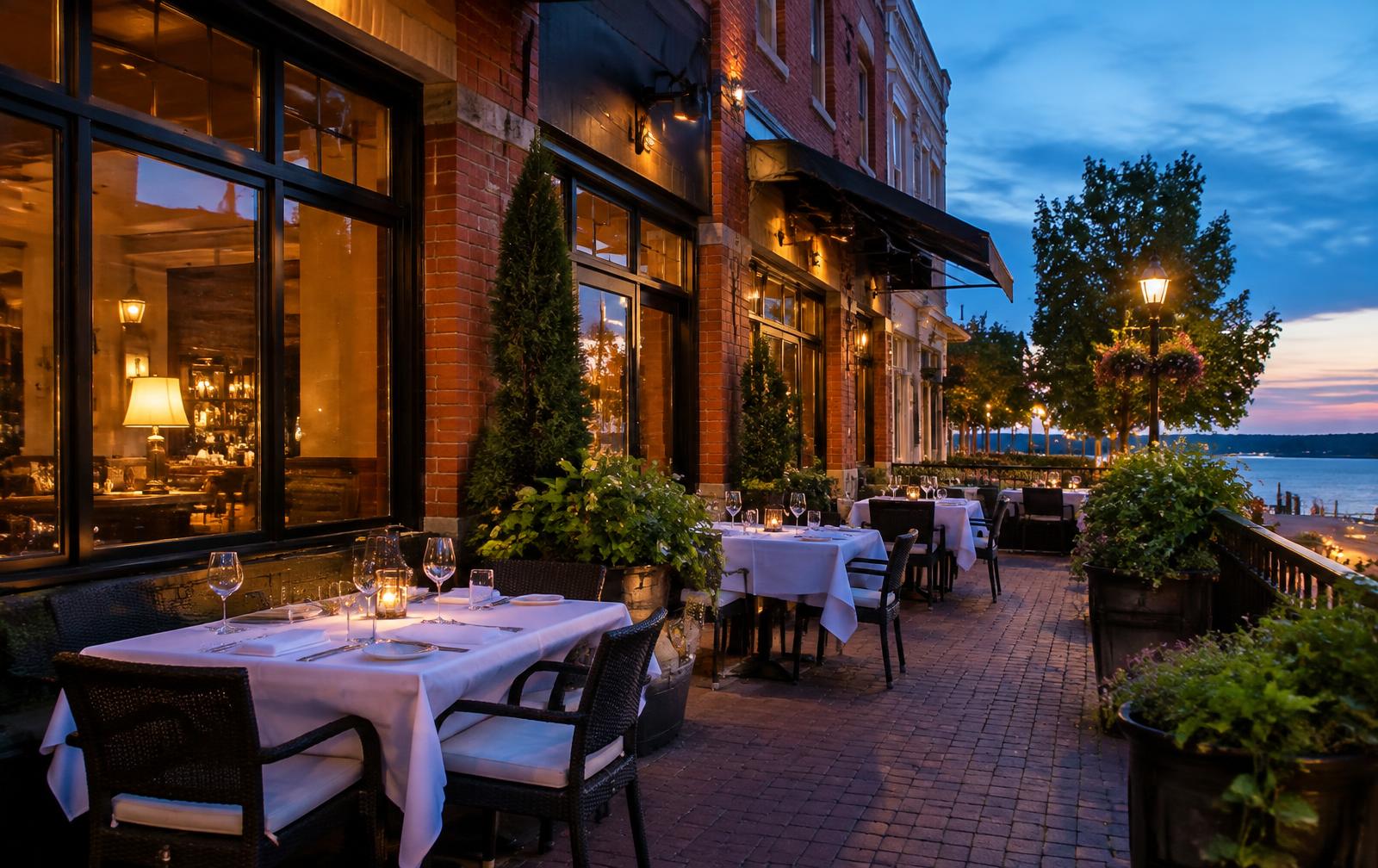
- Waterfront and boat-up spots define lake-season dining.
- Breweries and coffee shops round out the scene.
Downtown Mooresville
Main Street and its side streets combine historic storefronts with locally operated restaurants, coffee, cocktails, and casual gathering places. Epic Chophouse and 158 on Main are established reference points; hours and reservations should be checked directly.
02LangTree Lake Norman
The mixed-use district near I-77 provides a contemporary collection of restaurants and gathering spaces, useful for residents on the southern side of town and visitors arriving from Charlotte.
03Waterfront and peninsula dining
Lake-oriented dining is seasonal in feel even when open year-round. Travel time can change dramatically by road versus boat, and weekend waits are part of the rhythm.
04Downtown Mooresville
Historic Main Street and the surrounding blocks hold independent restaurants, coffee shops, bars and bakeries in restored brick buildings. It is the best place for a walkable dinner followed by a stroll or a drink.
05LangTree and the south end
Near exit 31, LangTree Lake Norman mixes restaurants, apartments and offices around a walkable plaza, with more dining along the Williamson Road and Brawley School corridors.
06On the water
Lake Norman offers restaurants reachable by car and by boat. Waterfront patios are busiest on warm weekend evenings; arrive early or plan weekday visits.
07Planning a great night out
Reservations help on weekends. Many local restaurants change menus seasonally, so check each restaurant's own site or call before visiting.
- Date night: downtown or LangTree
- Families: casual spots near Williamson Road
- Boat days: lakeside patios
- Groups: breweries with outdoor space
08Plan around dietary needs before choosing the setting
A waterfront view or an attractive dining room should come after confidence that the kitchen can accommodate the people at the table. For allergies or medically necessary restrictions, contact the restaurant directly and explain the specific concern rather than relying on a menu symbol or a third-party review. Ask about ingredient information, preparation practices, and cross-contact limitations; staff may not be able to provide the assurance a guest requires. Share relevant needs again when ordering, and follow personal medical guidance. For a group meal in Mooresville NC, make dietary questions part of the initial reservation discussion so no guest has to negotiate privately at the table. Keep an alternative plan that everyone can enjoy rather than pressuring a kitchen to promise something outside its capabilities.
09Ask concrete questions about physical access
A restaurant described as convenient or walkable may still present obstacles for a particular guest. Ask about the path from the intended parking area, entrance steps, interior circulation, restroom access, and the availability of suitable seating. A waterfront deck can have a different route from the main dining room, so identify the exact space being reserved. For downtown Mooresville, do not assume that an appealing historic storefront answers every accessibility question. Contact the restaurant directly and explain the accommodation needed without asking a companion to improvise on arrival. If weather changes the seating plan, confirm whether the alternative works as well. Choosing the setting around the whole party creates a more gracious evening than discovering at the door that the reserved table is impractical.
10Choose a room that suits the conversation
The right dining choice depends partly on what the gathering is meant to accomplish. A lively room can suit a celebration while making a quiet conversation difficult. Ask about live entertainment, amplified sound, table placement, and whether a private or quieter area is genuinely separate. Patio seating may feel open and relaxed, but wind, nearby activity, and temperature can influence comfort. For a business meal or a reunion with guests who have hearing difficulties, explain the priorities when booking rather than requesting only a preferred view. In Lake Norman dining, a waterfront address does not describe the acoustic conditions at every table. Keep the group's purpose ahead of the photograph, and confirm any important seating request with the restaurant instead of treating a reservation note as a guarantee.
11Clarify the details of a hosted group meal
A larger gathering works best when one organizer understands the restaurant's arrangements before inviting everyone. Ask whether the booking uses a regular table, a reserved area, or an exclusive room, and confirm any deposit, cancellation terms, menu limitations, and payment arrangements directly. Clarify how dietary requests will be handled and whether guests can order separately. Do not assume a room rental includes equipment, decorations, or permission to bring outside food. If visitors are traveling from different parts of the Lake Norman area, share a clear arrival plan and avoid scheduling another tightly timed activity immediately afterward. A written summary from the venue is more dependable than several guests remembering different parts of a phone conversation. Good hosting makes expectations clear without turning the meal into an administrative exercise.
12Use ordinary meals to evaluate a future home base
Dining can be a useful relocation exercise when it reflects the meals you will actually need rather than only a special occasion. From a shortlisted home, try an ordinary takeout pickup, a relaxed coffee stop, or dinner after your normal work commitments. Notice the route, parking arrangement, and whether carrying food home fits the evening routine. Check service areas directly rather than assuming a delivery platform will serve every Mooresville address. For households planning a custom home, these observations may also inform kitchen storage, pantry capacity, and informal dining spaces. An interior designer can translate those routines into a functional brief. The point is not to select a neighborhood by one restaurant, but to understand how everyday food choices connect to the way the household will live.