Dock rights are not automatic
Docks on Lake Norman are permitted through Duke Energy's shoreline management program. Confirm an existing dock's permit status, or the lot's eligibility for a new one, before relying on it in your decision.

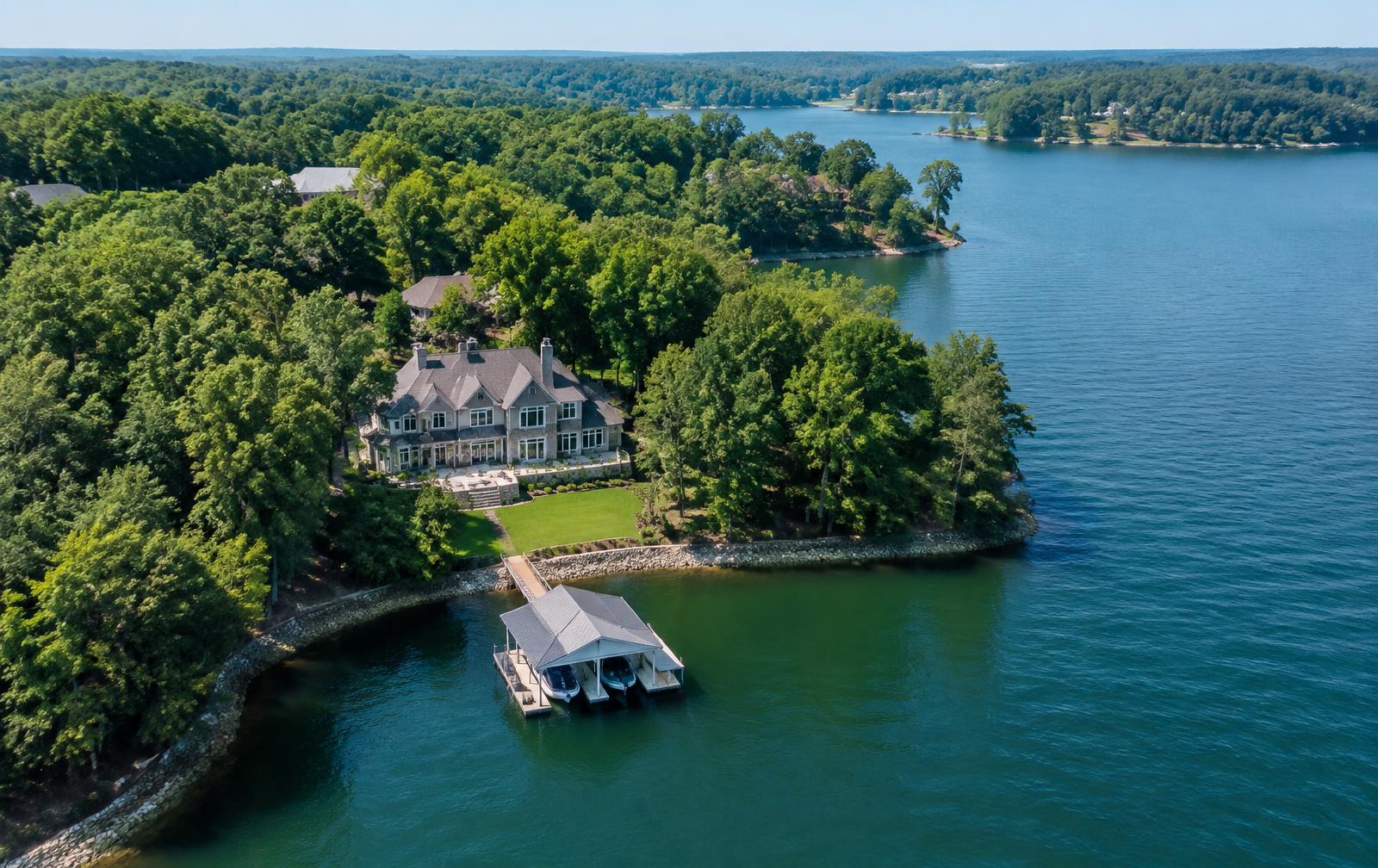
On the Water · Mooresville NC
Waterfront is the most desired — and most misunderstood — segment of the Mooresville market. Two homes with the same view can differ enormously in usable water access, dock rights, and long-term value.
Key Takeaways
Docks on Lake Norman are permitted through Duke Energy's shoreline management program. Confirm an existing dock's permit status, or the lot's eligibility for a new one, before relying on it in your decision.
Main-channel homes offer big views and quick access to open water, with more wake and wind exposure. Cove homes are calmer and more private, but water depth at the dock can vary with lake levels. Ask about depth at full pond and typical drawdown.
Waterfront purchases deserve extra verification beyond a standard inspection.
Peters & Associates helps buyers evaluate waterfront property across the Mooresville shoreline, and Peters Custom Homes evaluates lots for new construction. Reach the team at npeters@yourleaderinluxury.com or (704) 264-4572.
Main-channel frontage offers big views and deep water but more wake and traffic. Coves are calmer and more private but can become shallow when levels drop. Visit at different times and ask about depth.
Beyond the house, evaluate the shoreline.
Ask for the deed, survey, shoreline permits, septic records, flood information and HOA documents. Confirm whether improvements at the water match approvals and which party maintains them.
Budget beyond the house for dock and lift service, shoreline work, boat storage, insurance and exterior upkeep. A protected cove and an exposed main-channel lot can create very different maintenance patterns.
A beautiful shoreline view does not reveal how easily a household will use the water. Walk the route from the kitchen or storage area to the dock while considering coolers, equipment and guests who may have limited mobility. Notice slope, footing, stairs, lighting and where wet items will be stored on the return trip. Try to understand the route in more than ideal dry conditions without entering unsafe areas. Ask qualified professionals about feasible improvements before assuming a path can be widened or stairs replaced. Shoreline work may require Duke Energy review, while other local or private approvals can also apply. For Lake Norman waterfront homes, the practical connection between house and water often matters more to everyday enjoyment than a view that looks impressive from the main living room.
Dock lighting, boat lifts and nearby power supplies deserve evaluation by a licensed electrician familiar with waterfront installations. Ask the inspector to identify damaged equipment, unsuitable connections and other conditions requiring correction rather than relying on whether a light switches on. Water and electricity create hazards that a general visual tour cannot resolve. Establish where power can be shut off and follow professional guidance about safe use; do not enter the water to test a suspected problem. Ask how equipment is inspected and maintained and whether alterations require permits or other approvals. Duke Energy's shoreline responsibilities do not replace electrical code compliance or qualified electrical assessment. Treat this as a distinct safety investigation during a waterfront purchase, not a minor accessory check attached to the house inspection.
Waterfront privacy is different from privacy on a wooded interior lot. A house may feel secluded from the street while large windows face boating activity and homes across the water. Observe how outdoor seating and primary bedrooms relate to those sightlines, and consider what becomes visible when interior lights are on. Ask an interior designer about shading and glare control that preserves the view without assuming shoreline vegetation can be removed or altered. Visit at different times to understand sun exposure on the spaces you intend to use. Boats, voices and activity can also travel across water in ways a single tour does not reveal. The aim is not to eliminate the shared character of Lake Norman, but to choose a setting whose degree of openness suits your household.
A permitted dock is only one component of a practical boating arrangement. If you own a boat, have qualified professionals evaluate whether the lift, berth and approach suit its dimensions and operating requirements. Discuss maintenance access, fueling plans, launching arrangements and where a trailer can legally be stored. Confirm any community rules affecting watercraft rather than assuming private frontage removes all restrictions. Do not infer safe navigation from a still photograph or one trip made under different lake conditions. Ask appropriate boating professionals about the routes you expect to use and observe posted rules. This exercise can also clarify whether owning waterfront is the right solution at all: some households prefer water access without keeping a boat at home, while others need a property organized around frequent use.
An older waterfront property can invite an immediate vision of a larger replacement home, but existing improvements do not establish what can be rebuilt. Ask a qualified design team to review the survey, recorded restrictions, utility constraints and applicable development rules before assigning value to a redevelopment concept. Existing setbacks or other conditions may not carry forward in the way you expect. Duke Energy should address questions within its shoreline management responsibilities, while the Town of Mooresville or Iredell County and other relevant authorities address their respective approvals. Discuss demolition access, tree protection and the ability to stage construction without treating the shoreline as spare workspace. A property can be attractive as an existing home yet unsuitable for a particular replacement plan; those are separate purchase decisions that deserve separate feasibility work.
Common Questions
No. Existing permits, shoreline classification, lot geometry and governing rules determine dock status and future changes.
Water depth can affect boat access, especially when lake levels are lower. Measure and verify rather than relying on appearance.
Depending on the property, consider dock, seawall, septic, survey, electrical, insurance and general home specialists.
Do not assume it does. Ownership, permitted structures and use of the lake involve different rights and rules. Ask your attorney about the property's recorded rights and the relevant authorities about boating or shoreline regulations. Visit the setting with realistic expectations about shared lake use rather than treating the view as exclusively private space.
Investigate the specific proposal first. Grading, stairs, retaining structures and vegetation work can involve shoreline, local and private restrictions. Ask Duke Energy and the applicable local authority which approvals are relevant, and have a qualified professional assess drainage and stability. An existing informal path does not establish permission for a more substantial improvement.
Yes, when a lift is important to your plans. Have suitable professionals assess structural condition, electrical safety and compatibility with the intended watercraft. A lift operating without a boat does not prove it is appropriate for your use. Confirm what is included in the sale and review service or modification requirements before relying on it.
Do not clear first and investigate later. Shoreline vegetation may be subject to Duke Energy guidelines, local requirements and private restrictions. Describe the proposed work to the responsible authorities and use qualified professionals to assess tree condition and permitted options. Ownership of the house does not automatically authorize unrestricted alteration of the shoreline landscape.
Plan for oversight between visits, including leak detection, storm observations, dock checks and appropriate mechanical operation. Ask your insurer and service professionals about vacancy or intermittent occupancy conditions. Identify who can respond locally when a problem arises, and choose monitoring arrangements that supplement rather than replace necessary physical inspections and routine maintenance.
Related Guides