Where luxury concentrates
The Brawley School Road peninsula — including communities like The Point — holds the densest collection of high-value homes, with additional estate properties scattered along the shoreline and on large wooded lots.

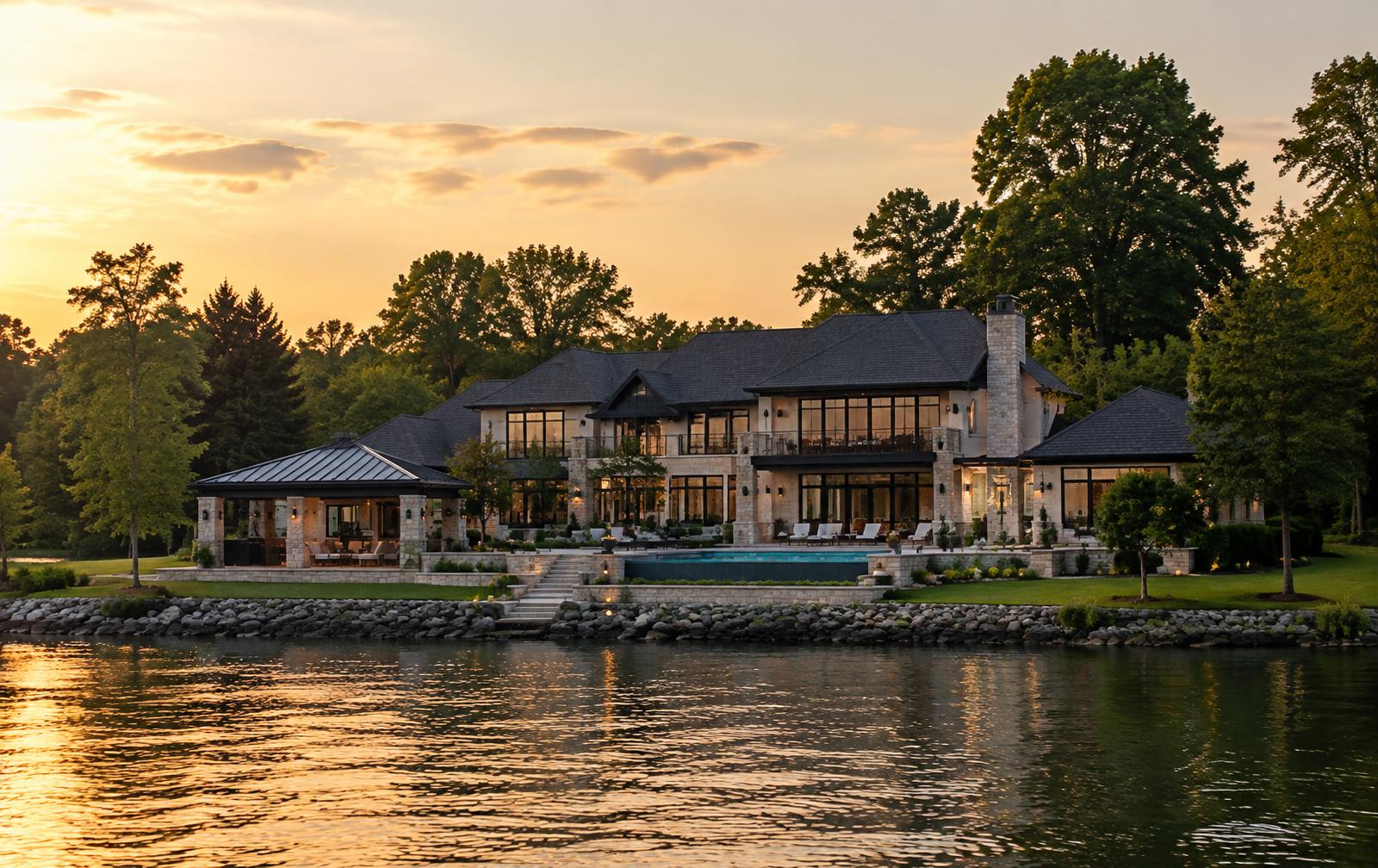
Luxury Market · Mooresville NC
Luxury in Mooresville is defined less by a price line than by a combination: waterfront position, architectural quality, lot privacy, and finish level. The market concentrates along the Lake Norman shoreline and in a handful of estate communities.
Key Takeaways
The Brawley School Road peninsula — including communities like The Point — holds the densest collection of high-value homes, with additional estate properties scattered along the shoreline and on large wooded lots.
At the luxury level, the land often matters more than the structure. Main-channel frontage, dock quality, water depth, privacy, and view corridors can outweigh interior square footage.
At the top of the market, many buyers compare an existing estate against a custom build on a premium lot. Peters & Associates can source private opportunities, and Peters Custom Homes builds estate-scale homes when the right house doesn't exist yet. Reach the team at npeters@yourleaderinluxury.com or (704) 264-4572.
Lake frontage, privacy, architectural quality, outdoor living, technology and craftsmanship define the top of the market more than square footage alone.
Look beyond finishes to structure and systems.
At the upper end of Mooresville's market, orientation, approach, mature landscape, shoreline, privacy and outdoor circulation can be as important as the floor plan. Evaluate how the house occupies the site from road and water.
Distinctive does not have to mean difficult. Durable materials, coherent architecture, comfortable room proportions and maintainable systems tend to age better than highly personalized novelty.
Luxury homes in Mooresville NC can contain equipment that exceeds the scope of a general home inspection. Start with the inspector, then identify which findings call for a structural engineer, pool professional, electrician, or other licensed specialist. Ask for access to mechanical rooms, service panels, crawl spaces, and detached structures before scheduling appointments. A beautifully finished room does not establish that concealed work was permitted or that equipment is functioning as intended. Request service histories and documentation for major alterations, and verify permits with the responsible authority. Sequence the inspections early enough for follow-up within the negotiated due-diligence period. The aim is a coordinated understanding of the property, not a collection of unrelated reports delivered too late to evaluate.
An estate showing may include furnishings, sculptural lighting, audiovisual equipment, garden ornaments, and freestanding outdoor appliances. Do not let an elegant presentation substitute for a precise agreement about what stays. Walk the property with your real estate agent and prepare a room-by-room list of items that matter to the purchase. Ask your North Carolina closing attorney how to identify inclusions and exclusions clearly, including any separate treatment of personal property. Photograph agreed items for reference with permission, and preserve relevant written terms. This is especially important when a home is staged or when a distinctive installation appears integral but contains removable components. Clear documentation protects both parties and keeps the final walkthrough focused on the agreed condition and contents.
A sophisticated home can become frustrating if the buyer receives keys but not operational control. Inventory automation hubs, security devices, network equipment, irrigation controls, and audiovisual systems. Ask which components are owned, leased, subscription-based, or tied to an installer account. Arrange a practical demonstration and request manuals, administrator access, and contact information for service professionals where available. A qualified technician should advise on secure account transfers and removal of prior access after closing. Do not circulate sensitive credentials through an ordinary marketing packet. For a Lake Norman estate used intermittently, the ability to monitor conditions matters as much as the appearance of the control panel. Include a handover plan in transaction discussions rather than assuming every system will be intuitive.
The most polished luxury floor plan separates the experience of entertaining from the work that supports it. Walk through a grocery delivery, catering setup, laundry cycle, and pool-service visit. Check whether service personnel must cross private rooms or whether a side entrance offers a practical alternative. Look for storage for cleaning equipment, seasonal furniture, luggage, and bulky recreational items. A generous garage may still leave little usable space once vehicles and mechanical equipment are accounted for. If revisions are needed, ask an architect or interior designer to assess circulation rather than merely adding cabinetry. These seemingly modest details affect everyday ease and privacy. They also reveal whether an impressive house functions comfortably for the scale of household and entertaining you actually intend.
Distinctive properties require a disciplined transaction plan because their features may not align neatly with nearby sales. Before making an offer, discuss financing requirements and appraisal procedures with the lender, including how unusual acreage, guest accommodations, or extensive amenities will be considered. Have your agent explain the evidence supporting the asking price without treating construction spending as a guarantee of market value. Coordinate lender milestones with inspections and the negotiated North Carolina due-diligence period. Ask the closing attorney to explain contractual exposure if financing or valuation does not proceed as expected. A cash purchase still benefits from independent value analysis. The objective is to understand the decision points while options remain available, rather than allowing an emotionally compelling property to dictate the entire timetable.
Common Questions
The strongest properties combine a valuable setting, thoughtful architecture, privacy, craftsmanship, resilient systems and well-planned indoor-outdoor living.
No. Some buyers value deep water and a dock; others prefer acreage, golf, privacy or easier access to town and I-77.
Compare the existing home's fit and replacement difficulty against land availability, design control, site work, approvals and the longer custom-build process.
Yes. Ask for available equipment schedules, service records, warranties, contractor contacts, and instructions for unusual systems. The seller may not have a complete manual, so prioritize essential controls and maintenance. A structured handover reduces dependence on memory and helps you establish a service plan without assuming prior arrangements transfer automatically.
Verify permitted use, utility connections, and any occupancy restrictions with the responsible local authority. Ask the inspector which additional specialist reviews are appropriate. If rental income or separate family occupancy is important, confirm that use with the HOA and a qualified attorney before assigning financial or lifestyle value to the building.
No. Furnishings create atmosphere but tell you little about concealed workmanship, permits, or maintenance. Evaluate the building independently through inspection and documentation. An interior designer can estimate the work needed to achieve your preferred aesthetic, while qualified inspectors and licensed trades assess the underlying conditions that a styled presentation cannot establish.
Use an agreed checklist covering included items, negotiated repairs, visible condition, access devices, and essential system operation. Your agent should coordinate adequate time and permitted access. Refer unresolved contractual questions to the closing attorney rather than assuming a missing component or incomplete repair can be handled informally after possession.
Begin with a written program separating essential daily needs from highly individual preferences. Ask your architect and real estate agent which changes may narrow the future buyer audience, without expecting a resale guarantee. Keep expensive structural decisions coherent and use more reversible finishes or furnishings for the strongest personal expressions.
Related Guides